HILL HOUSE B&B

A bed & breakfast website focused on seamless booking and a calm, home-like experience.

UX/UI Design 8-week project

OVERVIEW

This project focused on designing a user-friendly website for a bed & breakfast in North Carolina. The goal was to simplify the booking process while creating a clear, intuitive experience that builds trust and reflects the warm, welcoming atmosphere of the property. The design balances usability and visual storytelling to help users explore the space, understand key details, and confidently complete a reservation.
YEAR

2025

ROLE

UX Designer

PROJECT GOAL

Design a clean, user-friendly B&B website that simplifies the booking process and creates a clear, trustworthy experience.

About the project

Hill House is a concept website for a bed & breakfast located in North Carolina. The project focuses on creating a seamless and intuitive booking experience while reflecting the cozy, home-like atmosphere of the property. The design prioritizes clarity, accessibility, and visual storytelling to help users explore the space, understand key details, and confidently make a reservation.

The Challenge

THE PROBLEM

Many B&B websites lack intuitive navigation, clear booking flows, and a cohesive visual experience, making it difficult for users to explore the property and confidently complete a reservation.


  • Navigation is often unclear, making key information hard to find

  • Booking flows are not well structured, causing confusion and drop-offs

  • Important details such as amenities, policies, and local recommendations are scattered or missing

  • Outdated or inconsistent design reduces trust in the experience

How might we create a simple and trustworthy booking experience that helps users confidently plan and book their stay?

Understanding the user

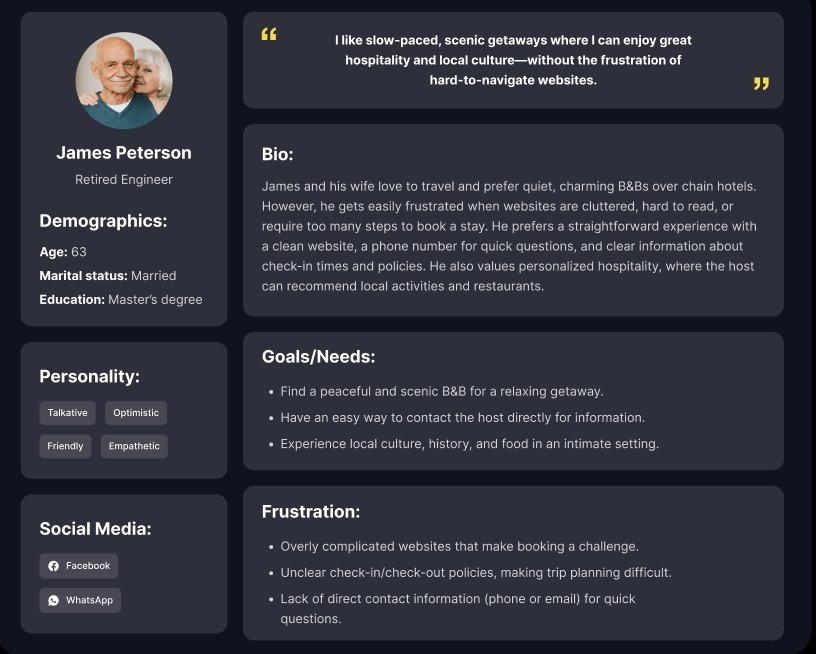
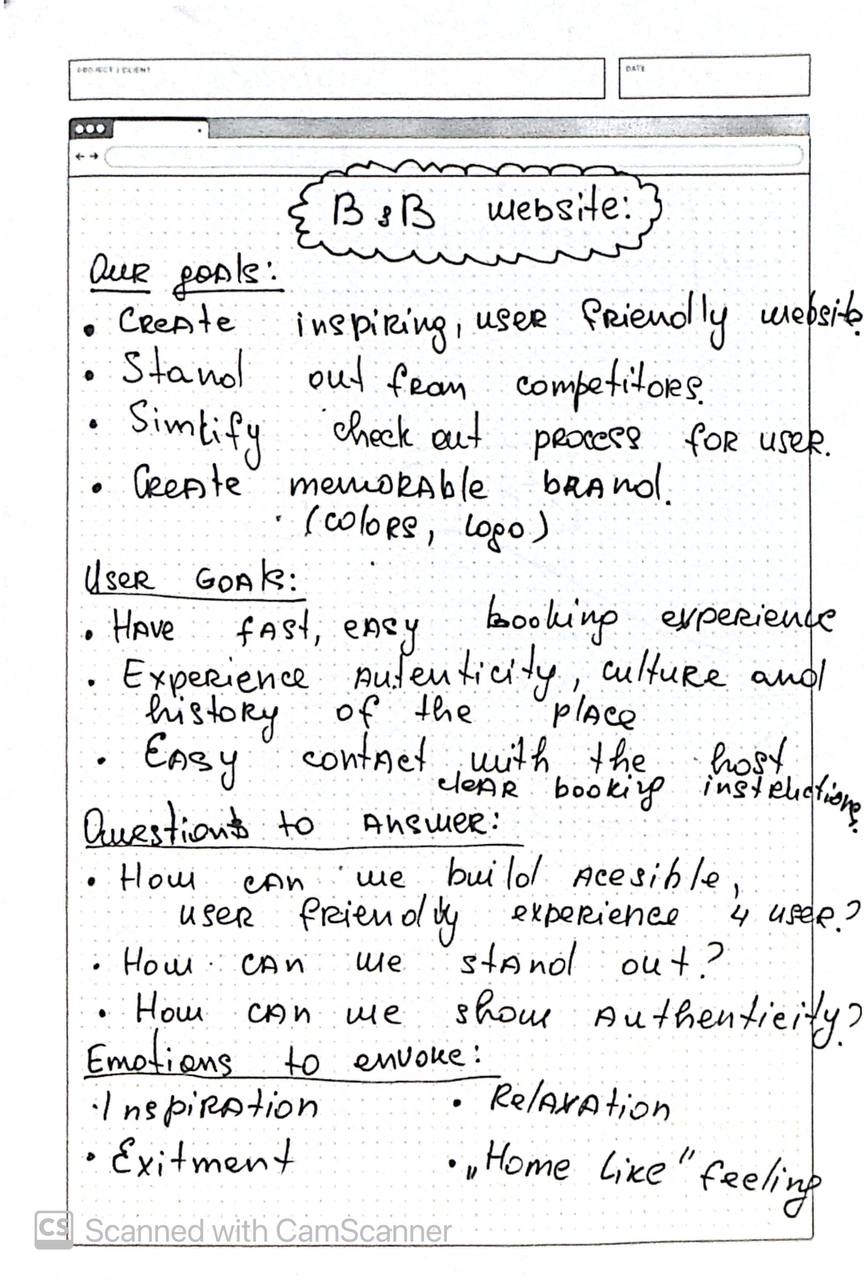
To better understand users, I explored common behaviors and expectations around booking accommodations, focusing on areas where users typically experience confusion or friction.

KEY INSIGHTS

  • Complex Navigation
    Hard to find key information due to cluttered layouts


  • Limited Contact Options
    Lack of visible contact methods reduces trust


  • Confusing Booking Flow
    Unclear steps and hidden pricing cause drop-offs


  • Outdated Visual Design
    Inconsistent design reduces credibility

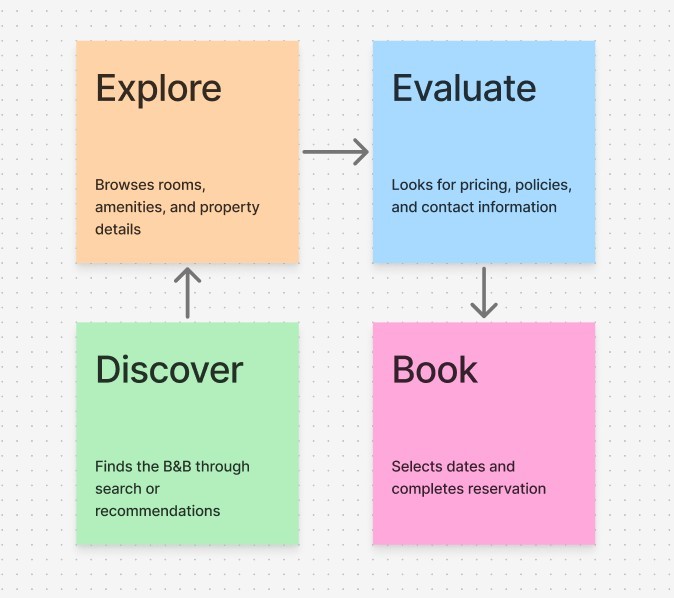
This simplified user journey highlights the key stages users go through when booking a stay, from discovering the property to completing a reservation. The biggest friction occurs during the evaluation and booking stages, where unclear pricing, policies, and next steps can reduce user confidence and lead to drop-offs.

Defining the solution

Based on the identified pain points, the design focused on improving clarity, trust, and ease of navigation across the booking experience. The solution prioritizes a structured layout, visible key information, and a simplified booking flow to help users move from exploration to reservation with confidence.

Key focus areas included:

  1. Improving navigation to make key sections easy to find

  2. Creating a clear and guided booking flow with visible steps and pricing

  3. Increasing trust through accessible policies, contact information, and consistent design

Ideation

I began the ideation process with paper wireframes to quickly explore layout options and define the core structure of the website. The goal was to create a simple and intuitive experience that allows users to easily browse rooms, understand key details, and complete a booking without confusion.


Design Process

The design process focused on turning user insights into a clear and structured solution. I prioritized simplifying navigation, improving clarity, and creating a more intuitive booking experience, starting with structure, then refining layouts, and finally applying visual design.

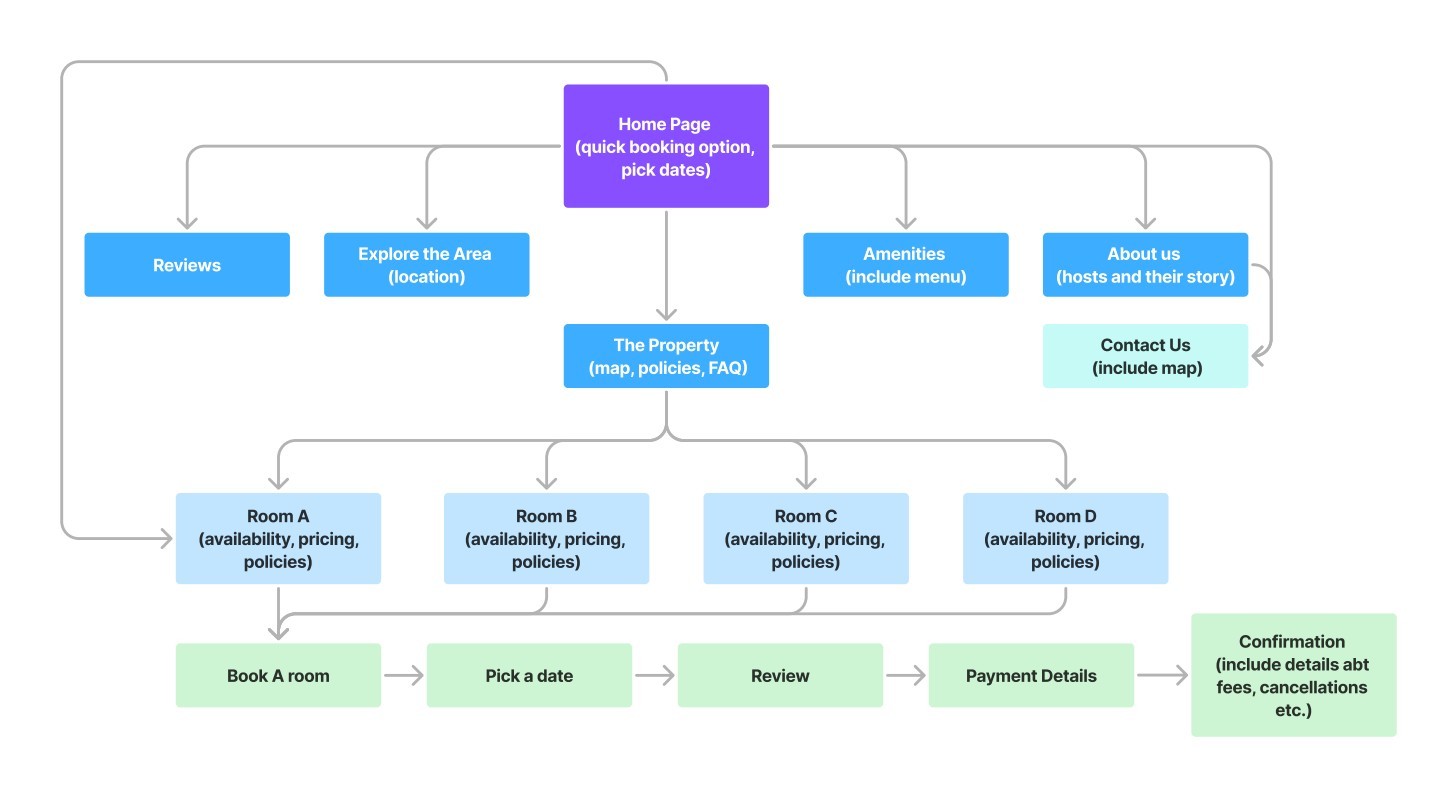
The information architecture was designed to simplify navigation and support a clear booking flow. Key sections such as Rooms, Property, Amenities, and Explore Area help users quickly find relevant information, while the booking process is structured into clear, guided steps.

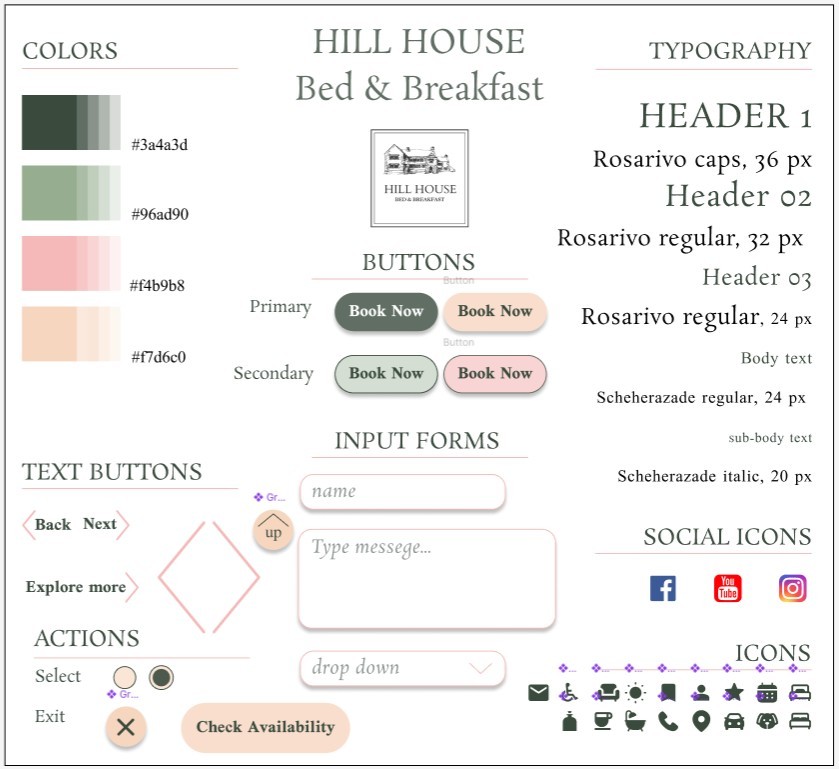
A set of reusable components was created to maintain consistency across the interface, including buttons, inputs, icons, and typography. This system helps ensure a cohesive and intuitive user experience.

Testing & Iteration

Through usability testing and feedback, I identified areas where the experience could be clearer, more structured, and easier to navigate. The main issues were related to navigation visibility, content density, and booking clarity, which informed the next iteration of the design.

What I learned

  • Users need persistent navigation to move easily through long pages

  • Overloaded pages reduce clarity and focus

  • Clear structure and visuals improve scannability and decision-making

  • Booking actions must be visible and easy to access

  • Missing or unclear details reduce trust in the experience

What I changed

  • Added sticky navigation and a scroll-to-top button for easier navigation

  • Separated the menu into its own page to reduce clutter and improve focus

  • Introduced room cards with clear visuals, pricing, and booking actions

  • Strengthened call-to-action placement across key pages

  • Improved footer structure with essential links and contact information

  • Refined layout and hierarchy for better clarity and readability

Final Design

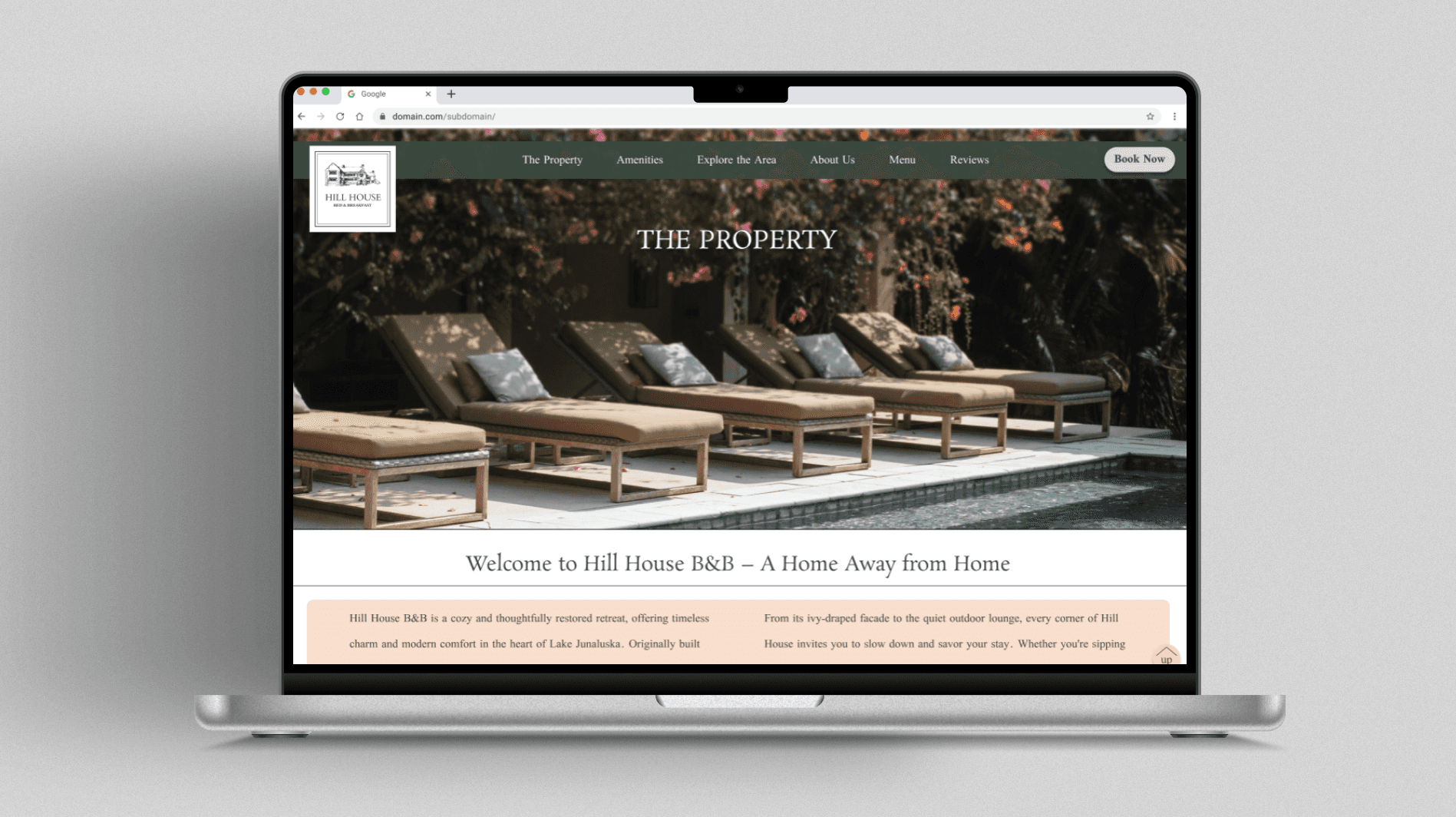
The final design transforms user insights into a clear, intuitive, and visually cohesive experience. The booking flow was simplified, navigation improved, and content reorganized to reduce clutter and make key information easy to find. Room cards were redesigned with real images, amenity icons, and clearer details to support quick comparison and decision-making. Additional elements such as dedicated pages, transparent booking information, and personalized touches help create a more welcoming and trustworthy experience.

Outcome & Impact

The solution creates a clear, intuitive experience that makes it easy to navigate, compare options, and complete bookings with confidence. Improved information hierarchy and transparent booking details strengthen trust, while simplified structure reduces friction throughout the journey. Personal touches, such as host messaging and curated content, add warmth and make the experience feel more human and welcoming.

Key Highlights

Key Futures

Clear Booking Flow

A structured, step-by-step booking process guides users from selection to confirmation, reducing confusion and making it easy to complete reservations with confidence.

Room Selection Cards

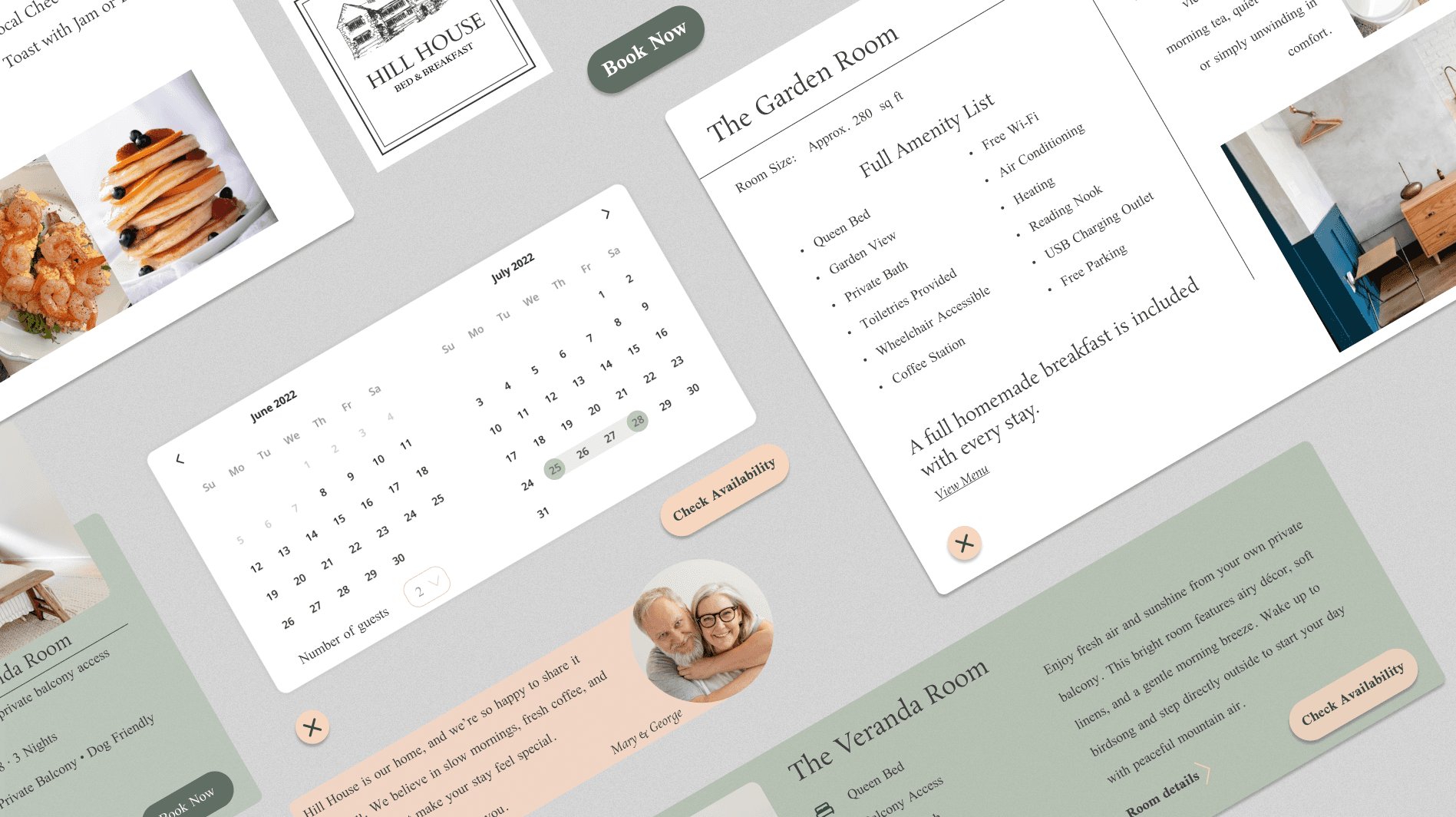
Visually rich room cards with images, amenities, and pricing allow users to quickly scan and compare options, supporting faster and more informed decisions.

Transparent Information

Clear access to policies, contact details, and confirmation information helps build trust and ensures users feel informed and confident throughout the booking experience.

Smooth Scroll
This will hide itself!

HILL HOUSE B&B

A bed & breakfast website focused on seamless booking and a calm, home-like experience.

UX/UI Design 8-week project

OVERVIEW

This project focused on designing a user-friendly website for a bed & breakfast in North Carolina. The goal was to simplify the booking process while creating a clear, intuitive experience that builds trust and reflects the warm, welcoming atmosphere of the property. The design balances usability and visual storytelling to help users explore the space, understand key details, and confidently complete a reservation.
YEAR

2025

ROLE

UX Designer

PROJECT GOAL

Design a clean, user-friendly B&B website that simplifies the booking process and creates a clear, trustworthy experience.

About the project

Hill House is a concept website for a bed & breakfast located in North Carolina. The project focuses on creating a seamless and intuitive booking experience while reflecting the cozy, home-like atmosphere of the property. The design prioritizes clarity, accessibility, and visual storytelling to help users explore the space, understand key details, and confidently make a reservation.

The Challenge

THE PROBLEM

Many B&B websites lack intuitive navigation, clear booking flows, and a cohesive visual experience, making it difficult for users to explore the property and confidently complete a reservation.


  • Navigation is often unclear, making key information hard to find

  • Booking flows are not well structured, causing confusion and drop-offs

  • Important details such as amenities, policies, and local recommendations are scattered or missing

  • Outdated or inconsistent design reduces trust in the experience

How might we create a simple and trustworthy booking experience that helps users confidently plan and book their stay?

Understanding the user

To better understand users, I explored common behaviors and expectations around booking accommodations, focusing on areas where users typically experience confusion or friction.

KEY INSIGHTS

  • Complex Navigation
    Hard to find key information due to cluttered layouts


  • Limited Contact Options
    Lack of visible contact methods reduces trust


  • Confusing Booking Flow
    Unclear steps and hidden pricing cause drop-offs


  • Outdated Visual Design
    Inconsistent design reduces credibility

This simplified user journey highlights the key stages users go through when booking a stay, from discovering the property to completing a reservation. The biggest friction occurs during the evaluation and booking stages, where unclear pricing, policies, and next steps can reduce user confidence and lead to drop-offs.

Defining the solution

Based on the identified pain points, the design focused on improving clarity, trust, and ease of navigation across the booking experience. The solution prioritizes a structured layout, visible key information, and a simplified booking flow to help users move from exploration to reservation with confidence.

Key focus areas included:

  1. Improving navigation to make key sections easy to find

  2. Creating a clear and guided booking flow with visible steps and pricing

  3. Increasing trust through accessible policies, contact information, and consistent design

Ideation

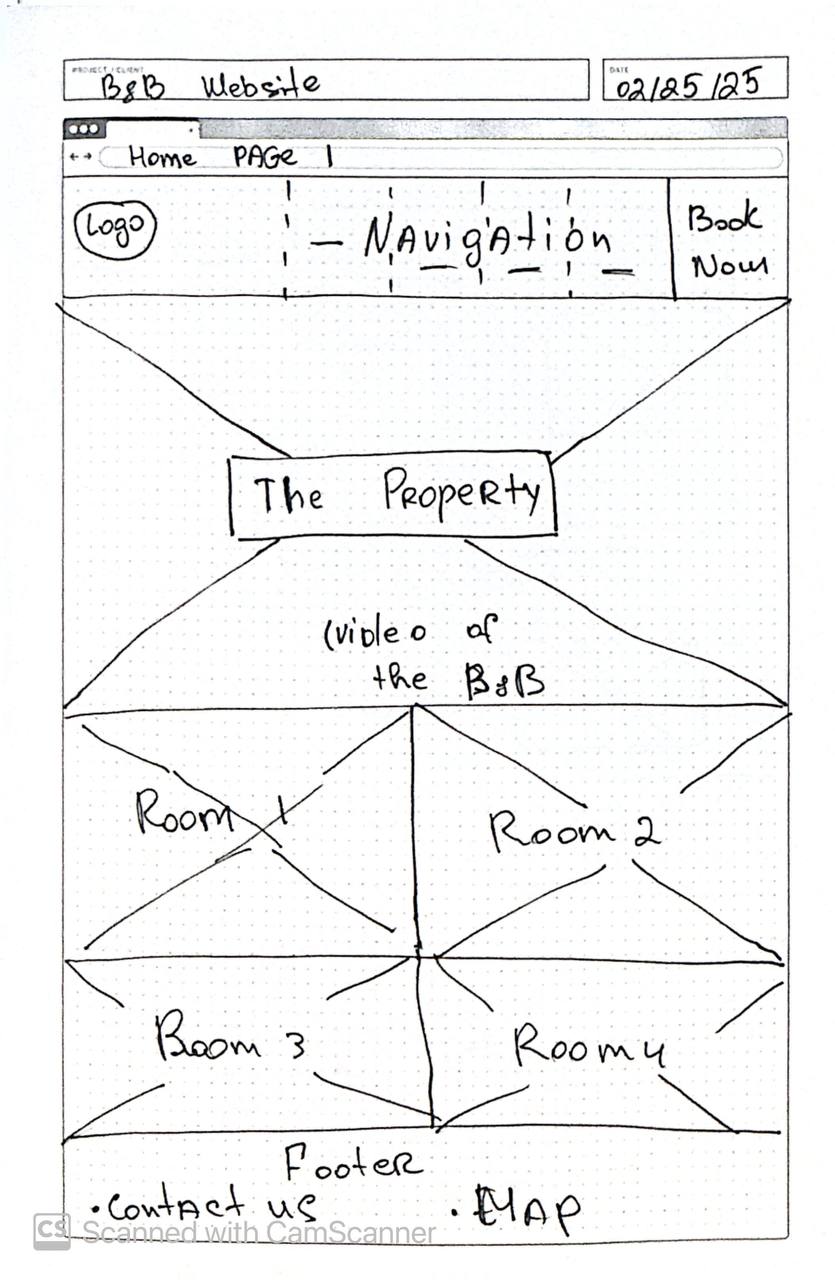
I began the ideation process with paper wireframes to quickly explore layout options and define the core structure of the website. The goal was to create a simple and intuitive experience that allows users to easily browse rooms, understand key details, and complete a booking without confusion.


Design Process

The design process focused on turning user insights into a clear and structured solution. I prioritized simplifying navigation, improving clarity, and creating a more intuitive booking experience, starting with structure, then refining layouts, and finally applying visual design.

The information architecture was designed to simplify navigation and support a clear booking flow. Key sections such as Rooms, Property, Amenities, and Explore Area help users quickly find relevant information, while the booking process is structured into clear, guided steps.

A set of reusable components was created to maintain consistency across the interface, including buttons, inputs, icons, and typography. This system helps ensure a cohesive and intuitive user experience.

Testing & Iteration

Through usability testing and feedback, I identified areas where the experience could be clearer, more structured, and easier to navigate. The main issues were related to navigation visibility, content density, and booking clarity, which informed the next iteration of the design.

What I learned

  • Users need persistent navigation to move easily through long pages

  • Overloaded pages reduce clarity and focus

  • Clear structure and visuals improve scannability and decision-making

  • Booking actions must be visible and easy to access

  • Missing or unclear details reduce trust in the experience

What I changed

  • Added sticky navigation and a scroll-to-top button for easier navigation

  • Separated the menu into its own page to reduce clutter and improve focus

  • Introduced room cards with clear visuals, pricing, and booking actions

  • Strengthened call-to-action placement across key pages

  • Improved footer structure with essential links and contact information

  • Refined layout and hierarchy for better clarity and readability

Final Design

The final design transforms user insights into a clear, intuitive, and visually cohesive experience. The booking flow was simplified, navigation improved, and content reorganized to reduce clutter and make key information easy to find. Room cards were redesigned with real images, amenity icons, and clearer details to support quick comparison and decision-making. Additional elements such as dedicated pages, transparent booking information, and personalized touches help create a more welcoming and trustworthy experience.

Outcome & Impact

The solution creates a clear, intuitive experience that makes it easy to navigate, compare options, and complete bookings with confidence. Improved information hierarchy and transparent booking details strengthen trust, while simplified structure reduces friction throughout the journey. Personal touches, such as host messaging and curated content, add warmth and make the experience feel more human and welcoming.

Key Highlights

Key Futures

Clear Booking Flow

A structured, step-by-step booking process guides users from selection to confirmation, reducing confusion and making it easy to complete reservations with confidence.

Room Selection Cards

Visually rich room cards with images, amenities, and pricing allow users to quickly scan and compare options, supporting faster and more informed decisions.

Transparent Information

Clear access to policies, contact details, and confirmation information helps build trust and ensures users feel informed and confident throughout the booking experience.

Smooth Scroll
This will hide itself!

HILL HOUSE B&B

A bed & breakfast website focused on seamless booking and a calm, home-like experience.

UX/UI Design 8-week project

OVERVIEW

This project focused on designing a user-friendly website for a bed & breakfast in North Carolina. The goal was to simplify the booking process while creating a clear, intuitive experience that builds trust and reflects the warm, welcoming atmosphere of the property. The design balances usability and visual storytelling to help users explore the space, understand key details, and confidently complete a reservation.
YEAR

2025

ROLE

UX Designer

PROJECT GOAL

Design a clean, user-friendly B&B website that simplifies the booking process and creates a clear, trustworthy experience.

About the project

Hill House is a concept website for a bed & breakfast located in North Carolina. The project focuses on creating a seamless and intuitive booking experience while reflecting the cozy, home-like atmosphere of the property. The design prioritizes clarity, accessibility, and visual storytelling to help users explore the space, understand key details, and confidently make a reservation.

The Challenge

THE PROBLEM

Many B&B websites lack intuitive navigation, clear booking flows, and a cohesive visual experience, making it difficult for users to explore the property and confidently complete a reservation.

  • Navigation is often unclear, making key information hard to find

  • Booking flows are not well structured, causing confusion and drop-offs

  • Important details such as amenities, policies, and local recommendations are scattered or missing

  • Outdated or inconsistent design reduces trust in the experience

How might we create a simple and trustworthy booking experience that helps users confidently plan and book their stay?

Understanding the user

To better understand users, I explored common behaviors and expectations around booking accommodations, focusing on areas where users typically experience confusion or friction.

KEY INSIGHTS

  • Complex Navigation
    Hard to find key information due to cluttered layouts


  • Limited Contact Options
    Lack of visible contact methods reduces trust


  • Confusing Booking Flow
    Unclear steps and hidden pricing cause drop-offs


  • Outdated Visual Design
    Inconsistent design reduces credibility

This simplified user journey highlights the key stages users go through when booking a stay, from discovering the property to completing a reservation. The biggest friction occurs during the evaluation and booking stages, where unclear pricing, policies, and next steps can reduce user confidence and lead to drop-offs.

Defining the solution

Based on the identified pain points, the design focused on improving clarity, trust, and ease of navigation across the booking experience. The solution prioritizes a structured layout, visible key information, and a simplified booking flow to help users move from exploration to reservation with confidence.

Key focus areas included:

  1. Improving navigation to make key sections easy to find

  2. Creating a clear and guided booking flow with visible steps and pricing

  3. Increasing trust through accessible policies, contact information, and consistent design

Ideation

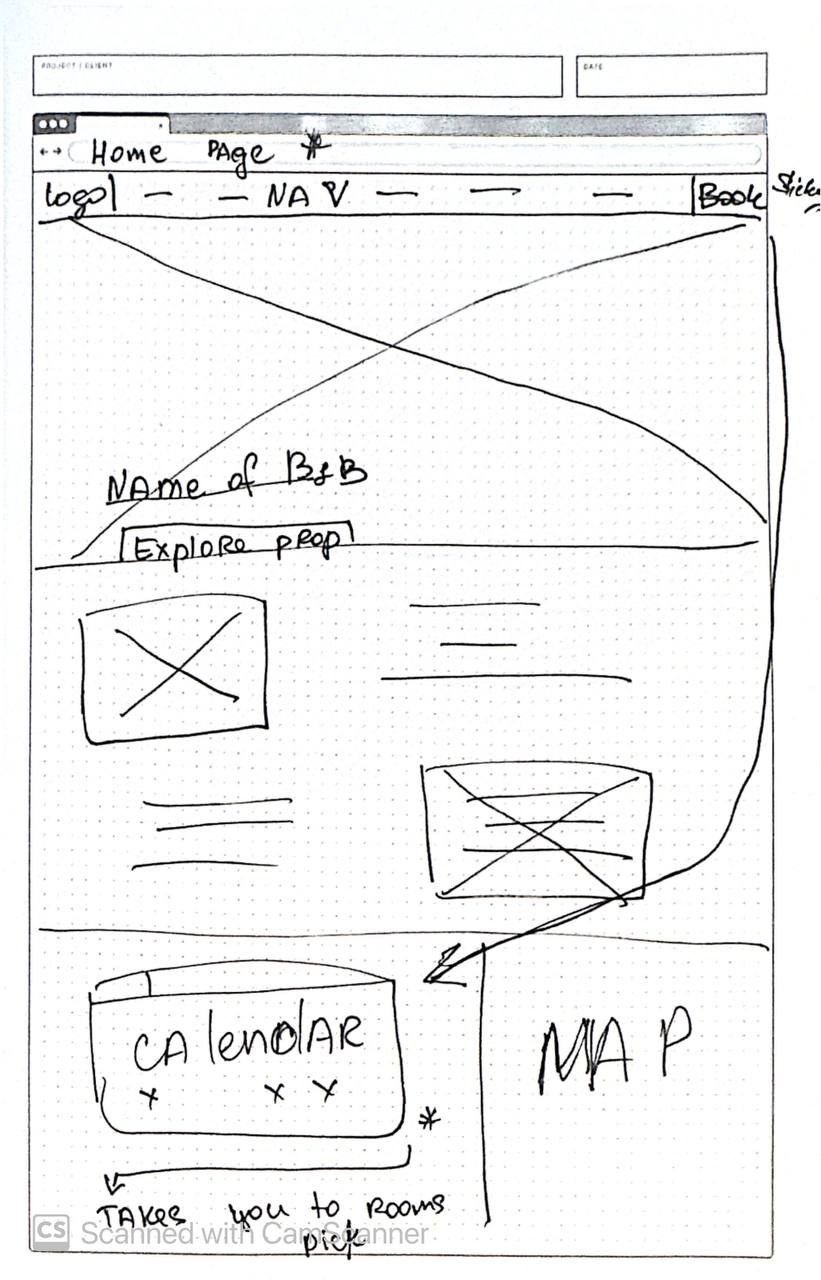
I began the ideation process with paper wireframes to quickly explore layout options and define the core structure of the website. The goal was to create a simple and intuitive experience that allows users to easily browse rooms, understand key details, and complete a booking without confusion.


Design Process

The design process focused on turning user insights into a clear and structured solution. I prioritized simplifying navigation, improving clarity, and creating a more intuitive booking experience, starting with structure, then refining layouts, and finally applying visual design.

The information architecture was designed to simplify navigation and support a clear booking flow. Key sections such as Rooms, Property, Amenities, and Explore Area help users quickly find relevant information, while the booking process is structured into clear, guided steps.

A set of reusable components was created to maintain consistency across the interface, including buttons, inputs, icons, and typography. This system helps ensure a cohesive and intuitive user experience.

Testing & Iteration

Through usability testing and feedback, I identified areas where the experience could be clearer, more structured, and easier to navigate. The main issues were related to navigation visibility, content density, and booking clarity, which informed the next iteration of the design.

What I learned

  • Users need persistent navigation to move easily through long pages

  • Overloaded pages reduce clarity and focus

  • Clear structure and visuals improve scannability and decision-making

  • Booking actions must be visible and easy to access

  • Missing or unclear details reduce trust in the experience

What I changed

  • Added sticky navigation and a scroll-to-top button for easier navigation

  • Separated the menu into its own page to reduce clutter and improve focus

  • Introduced room cards with clear visuals, pricing, and booking actions

  • Strengthened call-to-action placement across key pages

  • Improved footer structure with essential links and contact information

  • Refined layout and hierarchy for better clarity and readability

Final Design

The final design transforms user insights into a clear, intuitive, and visually cohesive experience. The booking flow was simplified, navigation improved, and content reorganized to reduce clutter and make key information easy to find. Room cards were redesigned with real images, amenity icons, and clearer details to support quick comparison and decision-making. Additional elements such as dedicated pages, transparent booking information, and personalized touches help create a more welcoming and trustworthy experience.

Outcome & Impact

The solution creates a clear, intuitive experience that makes it easy to navigate, compare options, and complete bookings with confidence. Improved information hierarchy and transparent booking details strengthen trust, while simplified structure reduces friction throughout the journey. Personal touches, such as host messaging and curated content, add warmth and make the experience feel more human and welcoming.

Key Highlights

Key Futures

Clear Booking Flow

A structured, step-by-step booking process guides users from selection to confirmation, reducing confusion and making it easy to complete reservations with confidence.

Room Selection Cards

Visually rich room cards with images, amenities, and pricing allow users to quickly scan and compare options, supporting faster and more informed decisions.

Transparent Information

Clear access to policies, contact details, and confirmation information helps build trust and ensures users feel informed and confident throughout the booking experience.

Smooth Scroll
This will hide itself!